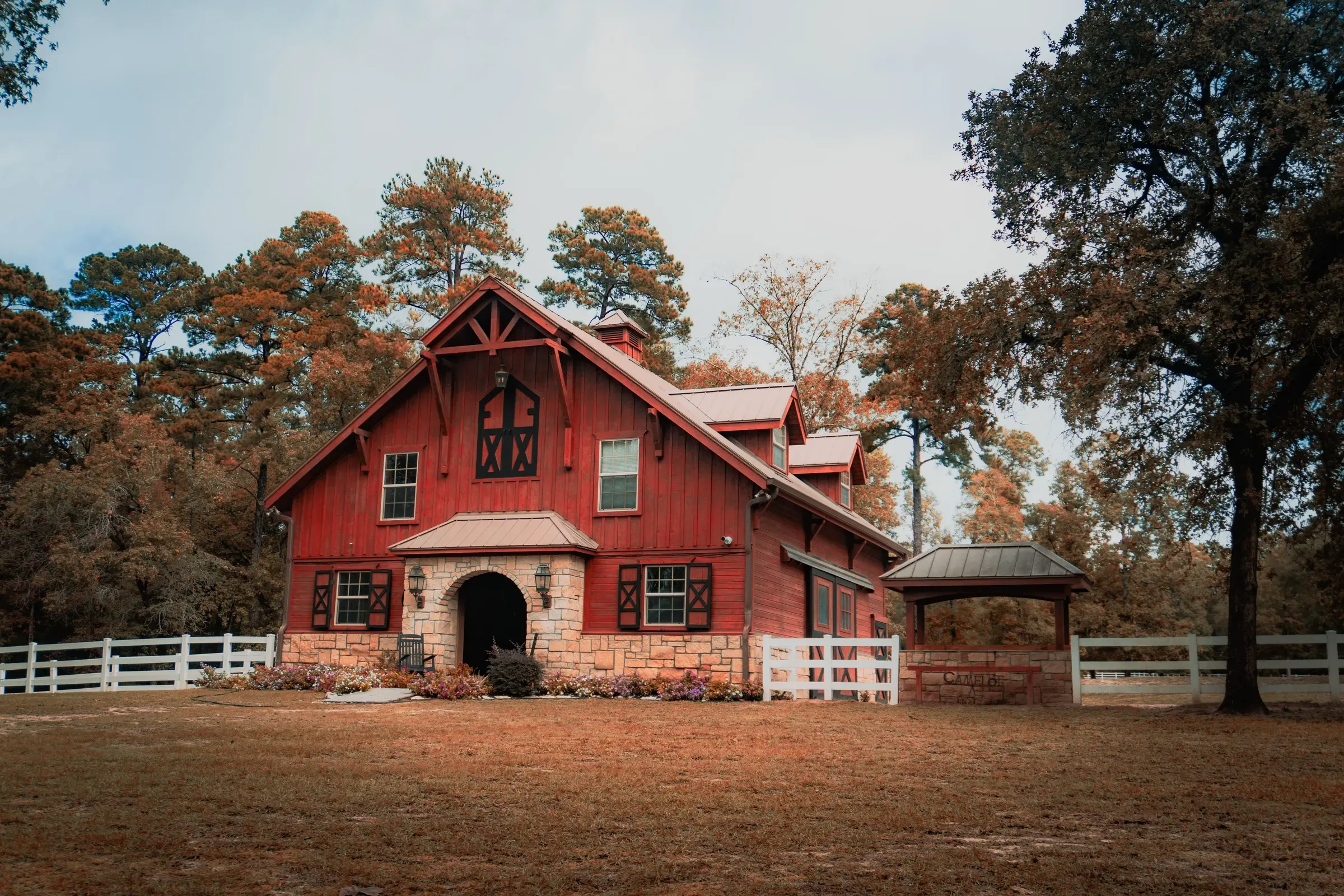

Barndominium and barn builders in San Marcos, Texas
San Marcos is the Hays County seat and a fast-growing I-35 city between Austin and San Antonio, built around its spring-fed river and Texas State University. Most building in town happens under city permits, but there is real acreage in the surrounding county where barndominiums and shops go up, and the Edwards Aquifer springs here make the whole area environmentally sensitive.
Quote requests from San Marcos go to one independent builder that builds across the Texas Hill Country and the San Antonio and Austin areas. Who does what.
Building around San Marcos
San Marcos sits in eastern Hays County on the San Marcos River, with Spring Lake and the university at its center and I-35 running through it. It is more urban than the other towns in our set, so in-town projects are city-permitted, while the barndominium and barn demand is out on the acreage in the surrounding county. Buyers there range from families wanting land near the city to investors near the university.
Barndominium builders in San Marcos, TX
Out in the county, barndominiums and metal building homes lead, with workshops common. In-city projects are more conventional and city-permitted, so acreage builds are where the barn and barndominium demand concentrates.
Barndominium construction near San Marcos happens out in the county, not in the city, where a general contractor builds custom metal homes and shops on acreage east and west of I-35. Inside the city a barndominium runs through city permits like any house. Out in unincorporated Hays County the contractor deals with the county's all-acreage septic permit rule and, near the springs, the Edwards Aquifer recharge zone. Ask any turnkey barndominium builder here which side of the city limits the tract is on before they price it.
Permitting in and around San Marcos
The first question in San Marcos is jurisdiction. Inside the city limits the City of San Marcos issues building permits and the process is city-run, and in the ETJ the city requires one when it supplies the water, wastewater or electric service. Out in unincorporated Hays County, there is no single-family building inspection, but you need the septic permit, and much of the area sits over the Edwards Aquifer recharge zone, which can require a TCEQ Water Pollution Abatement Plan before ground disturbance. San Marcos Springs supports federally listed species, so the area is environmentally sensitive. See the Hays County permitting page.
Site notes for San Marcos land
County acreage around San Marcos is thin soil over limestone within the aquifer's reach. Plan an aerobic septic unit, confirm the recharge-zone status of the parcel, and engineer for roughly 107 to 115 mph design wind, more on exposed ground, using the exact value from the ASCE Hazard Tool.
When San Marcos issues the permit, and the city septic program
The City of San Marcos building code is Ordinance 2023-09, adopted on second reading February 7, 2023, which moved the city to the 2021 International Code Council family of codes, including the 2021 International Residential Code, and the 2020 National Electrical Code. Its Section 101.5.1 reaches past the city limits: any project in the extraterritorial jurisdiction that will be provided water, wastewater or electric utilities by the City of San Marcos must obtain a building permit and meet the building code. So a barndominium on ETJ land that takes city water or city power is permitted and inspected by the city, while the same building on a well and a cooperative's power line is not. The city's Land Development Code summary (June 2026) adds that the code's subdivision chapter governs dividing land inside the city and its ETJ, so splitting a tract to sell or to build a second home goes through the city's platting rules either way.
Inside the city limits, septic is a city permit, not a county one. The City of San Marcos On-Site Sewage Facilities program permits residential and commercial septic systems within the city limits through its Environmental Health and Food Safety department. The application goes in online through MyGovernmentOnline, a reviewer flags corrections within 30 days and may visit the site, and an approved plan earns an Authorization to Construct that expires one year from issue. No part of the system may be covered until it passes the city's inspection, and the permit to operate comes after the final inspection. The fee is $415 for a new installation or a repair that needs updated plans, $250 for a re-inspection, and another $250 for an inspection after 5 p.m. or on a weekend. Outside the city limits the septic permit runs through Hays County instead.
City flood rules: two feet above the regulated floodplain
The city's floodplain rules are stricter than the federal minimum. Per the Engineering Department's answers on the Floodplain Damage Prevention Ordinance, any building permit on a lot where the land is not all at least two feet higher than the City regulated floodplain, or the adjacent floodplain, needs a floodplain permit. The city also maps a floodplain buffer zone, the extra land that would flood if the water surface rose two more feet, and a lot inside that buffer needs the permit too. The Floodplain Administrator in the Engineering Department can say whether a lot falls inside it.
A new building in the floodplain or the buffer needs a finished floor at least two feet above the regulated floodplain. The minimum finished floor elevation is issued only with the approved floodplain permit, and a FEMA Elevation Certificate from a surveyor or engineer is required during and at the end of construction. A new building inside the floodplain itself, where no building stood before, also needs modeling that shows no rise in the floodplain; for a single-family home the owner will live in, the city offers to run that model for a Permit Center fee, without promising the result. On an existing house in the floodplain or the buffer, improvements over 50 percent of the structure's appraised value require raising it, and an addition must itself sit two feet above the regulated floodplain. Garages and crawl spaces used only for parking and storage do not set the finished floor elevation, which matters for a barndominium with a shop bay on the ground floor.
Three electric providers, and water inside the Edwards district
The city's utility answers name three electric providers inside San Marcos: San Marcos Electric Utility, Pedernales Electric Cooperative and Bluebonnet Electric Cooperative, with a service area map to tell them apart. For Pedernales, see the cooperative's extension terms on the Dripping Springs page. Bluebonnet's line extension rules charge a non-refundable contribution in aid of construction, paid before work starts, for estimated costs above $1,950 per residential or single-phase commercial service and above $350 per non-residential general service. Temporary construction power (generally 24 months or less) pays all extension and removal costs. A large new overhead residential extension that another member later builds onto may qualify for a partial refund under the cooperative's refund policy, which has a deadline for notice, so read its current terms before the second extension goes in. A developer dividing land where most lots are 10 acres or less pays the costs above $1,950 per service in advance.
San Marcos sits inside the Edwards Aquifer Authority's jurisdiction, which covers part of Hays County. Its drought plan cuts pumping by Edwards permit holders, water utilities included, and it lists the City of San Marcos, Crystal Clear Special Utility District and County Line Special Utility District as Hays County providers to ask about stage restrictions. San Marcos Springs is one of the plan's three triggers: Stage 1 starts for the San Antonio Pool when the springs' 10-day average falls below 96 cubic feet per second. On the authority's conditions page, updated October 21, 2026, San Marcos Springs read 95 cubic feet per second on that average and the pool was in Stage 3, a 35 percent reduction. The authority does not enforce lawn watering rules; the water provider does, so ask it what the stage means for a new tap. Rules for drilling an Edwards well are on the New Braunfels page. Where the land might reach city water or sewer, the city's Engineering Department will send a utility serviceability letter for a bank loan: email [email protected] with the property address and an aerial of its limits, and the letter comes back with a map of the city water and wastewater lines nearby.
Get a free quote for your San Marcos project
Tell us about your project. Your details go to one independent builder, who can schedule a free consultation or quote. No cost, no obligation.
Thank you. Your request is in.
The builder will reach out about your project. You can also call (830) 272-7461.
San Marcos building questions
Is my San Marcos project handled by the city or the county?
It depends on where the land is. Inside the City of San Marcos limits the city issues building permits, and in the ETJ it requires one when the city supplies water, wastewater or electric service. Out in unincorporated Hays County, there is no single-family building inspection, but you need the septic permit and, if the parcel is over the Edwards recharge zone, likely a TCEQ review. Confirm your jurisdiction first.
Why is the Edwards Aquifer such a big deal around San Marcos?
San Marcos Springs is the second-largest spring in Texas and a major aquifer discharge point that supports federally listed species. That makes the area environmentally sensitive, and building over the recharge zone can require a TCEQ Water Pollution Abatement Plan. Check the TCEQ Edwards map viewer for your parcel.
Who builds in San Marcos?
An independent local builder who works in Hays County and provides the quote.
Updated