Comparison guide
Barndominium vs traditional home vs pole barn
Barndominium, metal building home, pole barn, traditional house: the words get used loosely. This guide sorts out what actually separates them, and where each one makes sense on Hill Country acreage.
The short version
- A pole barn is a shell. A barndominium is a shell finished as a home. A traditional home is conventional framing on a full foundation.
- Barndominiums win on speed, wide open spaces, and combining home with shop. They do not automatically win on cost once finished.
- On Hill Country land, septic, well, and site work cost the same no matter which you choose.
Start with the words
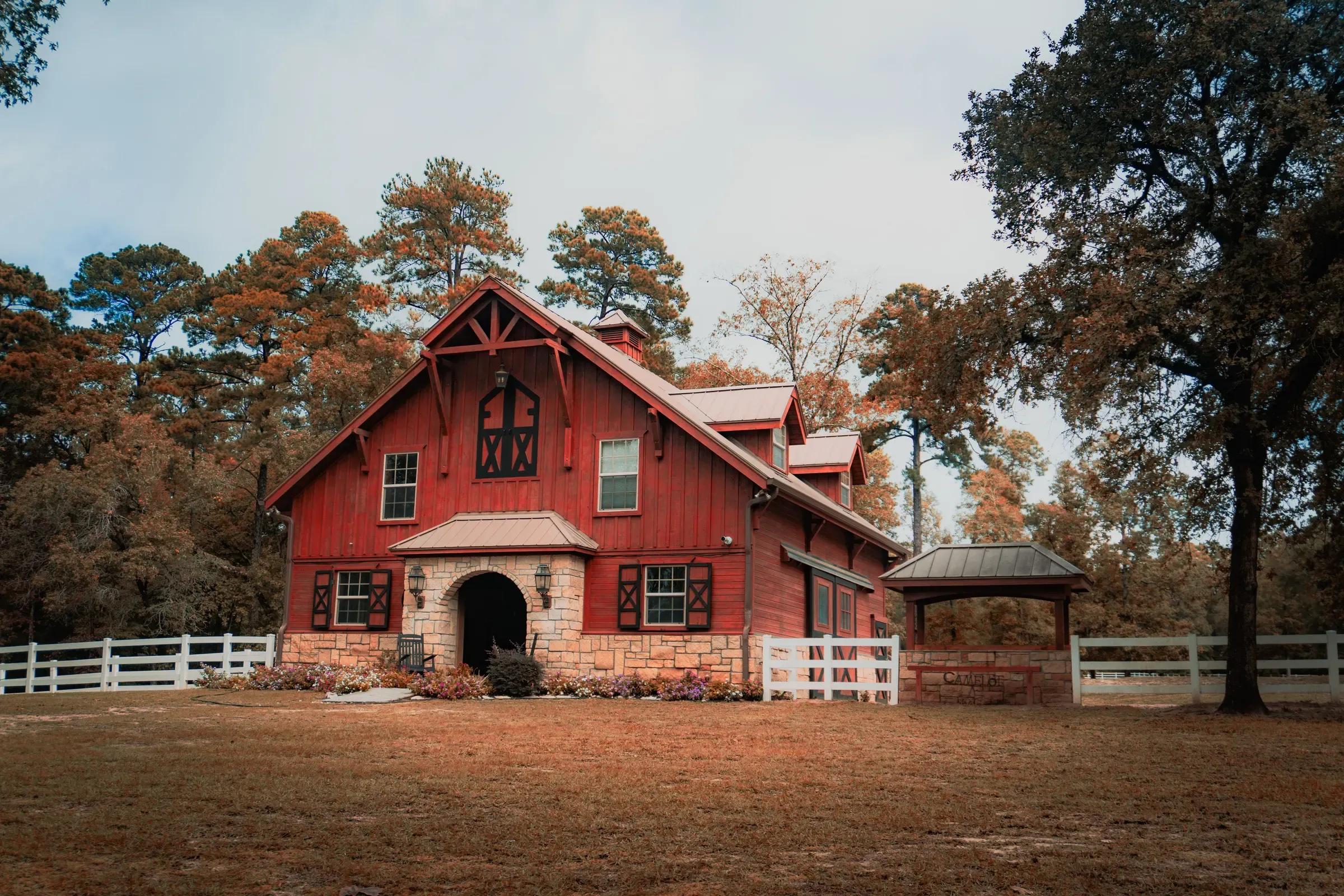
A pole barn is post-frame construction: a building on large posts rather than a continuous foundation. It is a shell. A barndominium is that shell, post-frame or steel, finished as a home, with insulation, interior walls, plumbing, and real finishes. A metal building home usually means the same idea on a steel frame specifically. A traditional home is conventional wood or masonry framing on a slab or foundation, the standard subdivision house. The key insight: barndominium and pole barn are not opposites. One is often the finished version of the other.
Where the barndominium wins
- Speed. The shell goes up and dries in quickly, which can shorten the schedule.
- Open space. Wide clear spans give you big, column-free rooms and tall ceilings that are expensive to achieve with conventional framing.
- Home plus shop. Nothing combines living space with a real shop, RV bay, or barn under one roof as naturally.
- Durability and maintenance. A metal exterior shrugs off a lot, with less upkeep than some traditional claddings.
- Phasing. You can dry in the shell now and finish the interior later as budget allows.
Where a traditional home may suit better
- Strict subdivisions. Some deed-restricted neighborhoods limit metal homes. Check restrictions before you plan.
- Financing and appraisal. Traditional homes have more comparable sales, which can make appraisals and loans smoother. See the financing guide.
- A conventional look. If you want a classic house and no shop, the barndominium advantages matter less.
What is the same either way on Hill Country land
Do not let the building-type debate distract you from the site. Whether you build a barndominium or a traditional home, the same Hill Country realities apply: an aerobic septic system, a well, rock and pad site work, and wind engineering on exposed ground. Those costs are tied to the land, not the building style. The cost guide breaks them down. When you are ready to price a real plan, start on the barndominium builders page.
Keep reading
Frequently asked questions
Is a barndominium cheaper than a traditional home?
It can be, but not automatically. The shell goes up fast and a practical finish saves money, but a high-end interior costs about the same per square foot as any custom home, and Hill Country site work, septic, and wells apply either way. The savings are most real with an efficient layout and a sensible finish level.
How is a barndominium different from a pole barn?
A pole barn is post-frame construction, the structural shell. A barndominium is that shell (or a steel one) finished as a home. In other words, a barndominium often starts as a pole barn and adds insulation, interior walls, plumbing, and finishes. A bare pole barn with no living space is just a barn.
Do barndominiums hold their value?
In the Hill Country, where they are common and accepted, well-built barndominiums on good land have a real market. Appraisals can be trickier than for stick-built homes because there are fewer comparable sales, which matters more for financing than for resale in an area where buyers expect the style.