Pole Barn and Post-Frame Builders in the Texas Hill Country
Pole barn is the old name for post-frame construction: a building framed on large posts set in or on the ground rather than a continuous foundation. It is the economical workhorse of rural building, fast to put up and easy to adapt for a shop, storage, cover, or the shell of a barndominium. An independent local builder who puts up post-frame across the Hill Country prices the job.
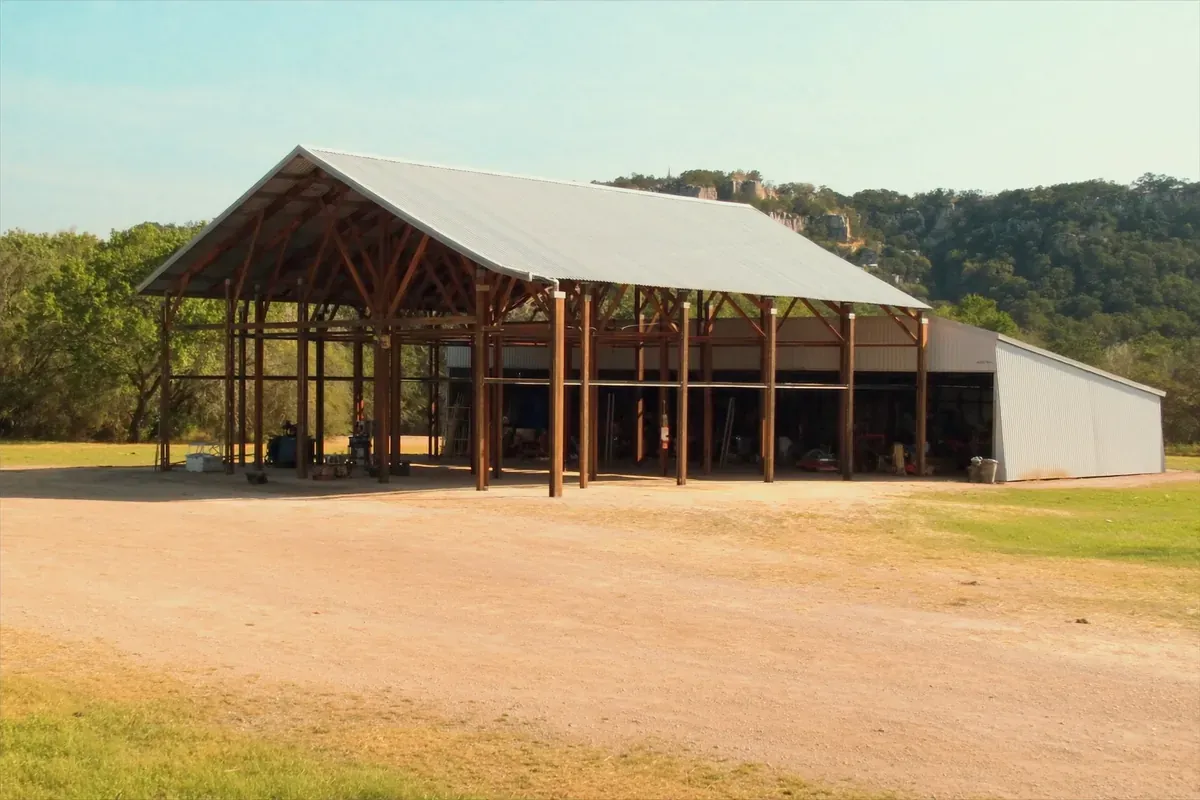
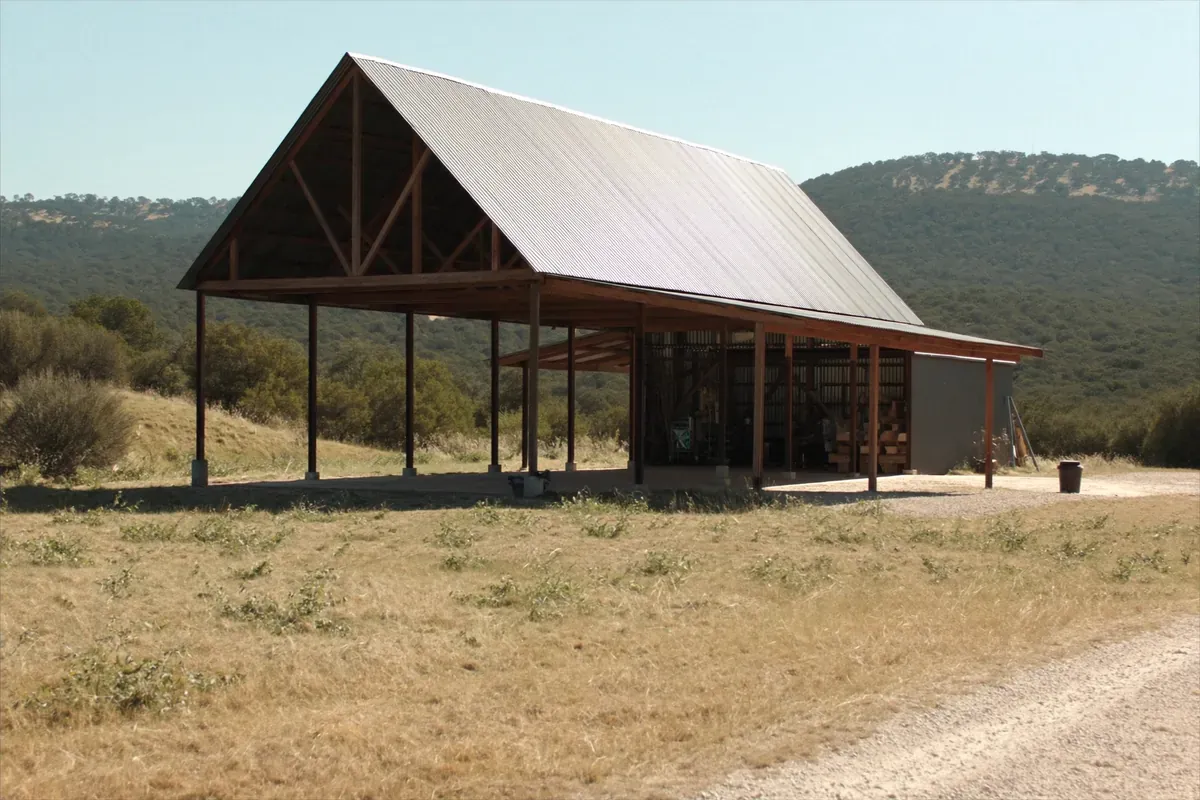
Pole Barns & Post-Frame examples
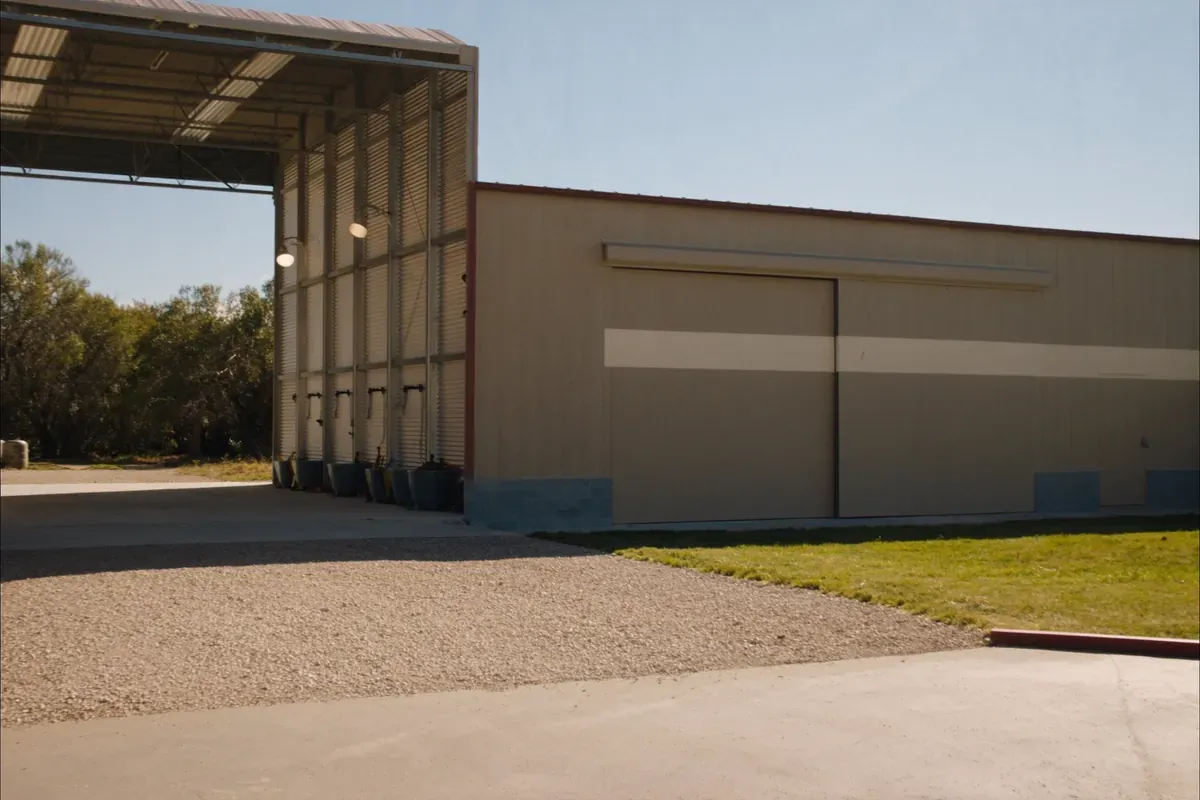
Quote requests for this building type go to one independent builder that puts up steel, post-frame and barndominium projects across the Texas Hill Country and the San Antonio and Austin areas. Who does what.
What it is
Post-frame buildings carry their load on widely spaced posts and trusses, which means fewer materials, big clear spans, and a quick dry-in. You can leave it open for equipment, enclose it for a shop, insulate it for a workshop, or finish it as living space. The same system underlies many barndominiums. Compared with a steel rigid frame, wood post-frame is often cheaper for small to mid-size spans.
Who it suits
Post-frame suits anyone who wants the most building for the money: equipment and hay cover, a shop or garage, a riding arena, or a future barndominium shell. It suits phased plans, where you dry in the shell now and finish later. For very wide or very tall commercial-grade buildings, a steel frame sometimes makes more sense, which the builder can advise on.
Typical Hill Country use cases
- An open or enclosed shop and storage building on a working place
- A barndominium shell to finish over time
- Equipment, RV, or hay cover with optional enclosed bays
- A covered riding arena or livestock shelter
What it costs (honestly)
Post-frame is usually the most economical way to roof a given footprint. As a general, third-party reference, national cost data shows a wide range driven mostly by size, whether the building is open or enclosed, and the finish. A basic open pole barn sits at the low end; an insulated, finished shop costs more. Hill Country site work, especially rock and pad prep, is the variable the national calculators miss. See our cost guide. The builder prices your build.
Read the full Hill Country cost guide Hill Country considerations
- On thin soil over limestone, post setting and pad prep can mean rock work. A local builder prices that from experience.
- An open pole barn that does not generate wastewater usually does not need a septic permit, but a finished shop with a bathroom or a barndominium does.
- Wind matters even for open structures: an exposed open barn sees significant uplift, so bracing and anchoring should suit the site.
- If the building supports a genuine ag operation, ask the appraisal district how it is treated, but do not assume it is permit-free; the septic rule still applies to anything with plumbing.
Related building types
What it costs, and what happens after you send it
- How much does a barndominium cost?
- A finished barndominium in the Hill Country runs $150 to $350 per finished square foot in published planning ranges, plus roughly $43,000 to $156,000 of Hill Country site work that most calculators leave out: aerobic septic, a well, limestone work, engineered plans and published electric fees. Those are third-party figures verified as of July 27, 2026, not our prices and not a quote. The cost calculator shows the publisher and date behind every band and lets you run your own square footage.
- How fast will someone get back to me?
- Your request goes to one independent builder, usually within about an hour during the day. The builder then contacts you to arrange a site visit and price the work on their own schedule.
- What building types are covered?
- Barndominiums, horse barns, workshops, equipment and hay barns, garages, covered arenas, commercial metal buildings and the concrete slabs under them. See every building type.
Only the builder who walks your site can price your actual project.
Get a free quote for your pole barns & post-frame project
Tell us about your project. Your details go to one independent builder, who can schedule a free consultation or quote. No cost, no obligation.
Thank you. Your request is in.
The builder will reach out about your project. You can also call (830) 272-7461.
Pole Barns & Post-Frame questions
Is a pole barn the same as post-frame?
Yes. Pole barn is the traditional term and post-frame is the modern construction name for the same approach: a building framed on large posts rather than a continuous foundation. Post-frame is the term most builders and engineers use now.
Do I need a permit for a pole barn in the Hill Country?
Out in the unincorporated county, most Hill Country counties do not run general building inspections, so an open pole barn with no plumbing often needs no county building permit. Add a bathroom, a kitchen, or living space and you trigger the septic permit. Inside a city, building permits apply. Check your county page for specifics.
Can a pole barn become a barndominium later?
Often yes, if it is planned that way. Building the shell to finish later is a common phased approach. Tell the builder your long-term plan up front so the structure, slab, and utilities are sized for the finished use.
Updated