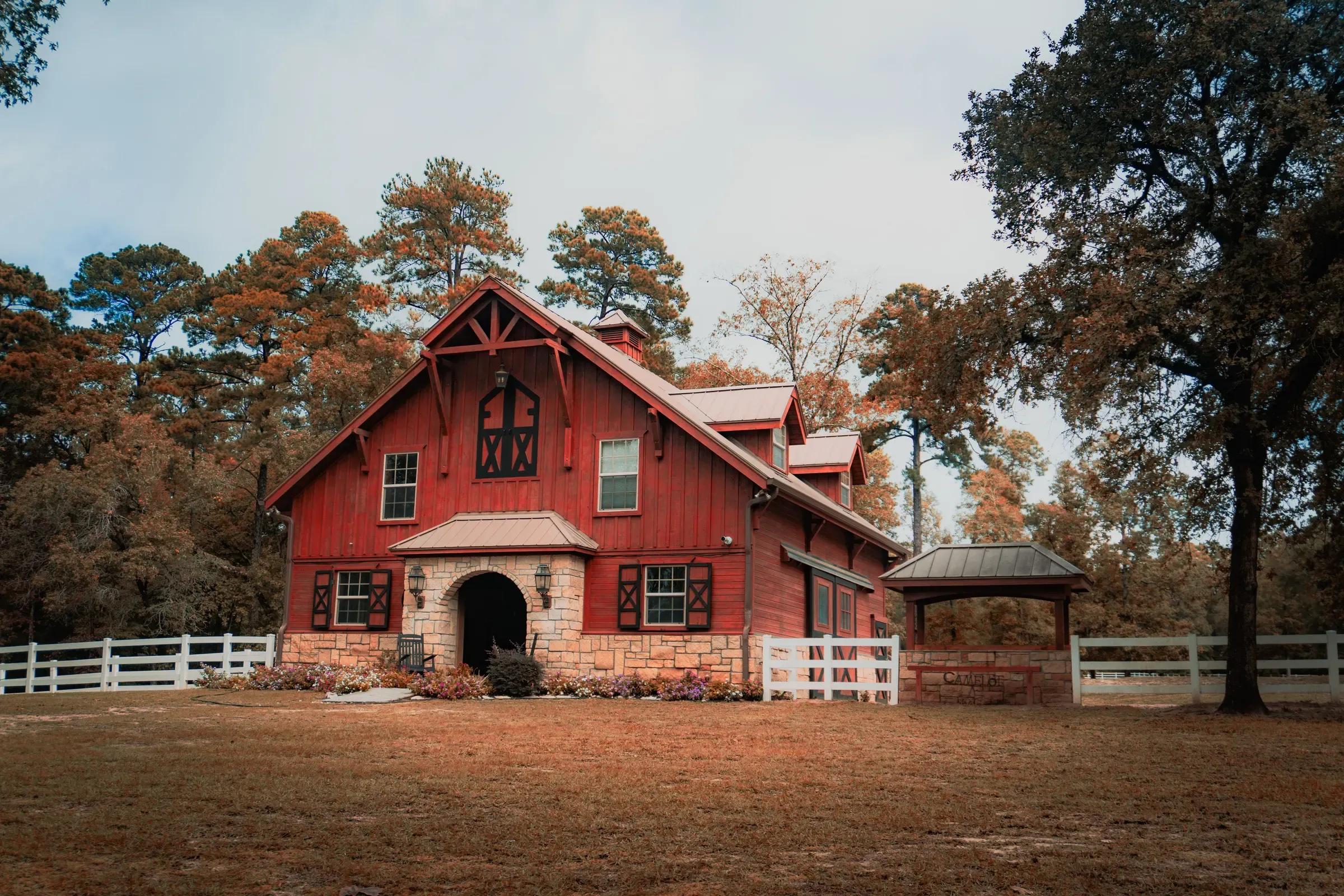

Travis County
Barndominium and barn builders in Austin, Texas
Austin barndominium projects mostly happen on the edges of the metro, not in the city: the Hill Country side west toward Bee Cave and Lakeway, the north around Cedar Park, and the open land east toward Manor and Elgin. The city permits everything inside its limits, its septic program reaches every Lake Austin waterfront, and Travis County takes over on unincorporated acreage, where every build needs a development permit.
Quote requests from Austin go to one independent builder that builds across the Texas Hill Country and the San Antonio and Austin areas. Who does what.
Building around Austin
Travis County wraps around the city, and Austin's own extraterritorial jurisdiction reaches into Travis, Williamson, Hays and Bastrop counties, so a tract "near Austin" can fall under three rulebooks: the city inside its full-purpose limits, the city's limited powers in the ETJ (platting and environmental rules, no zoning), and Travis County for everything else. West of the city the land climbs into Hill Country limestone above Lake Austin and Lake Travis; east of I-35 it flattens into farmland. Buyers here want what the Hill Country towns want: a home with a shop, an RV bay or horse facilities on a few acres, within a commute of the city.
Barndominium builders in Austin, TX
Barndominiums and metal building homes lead on the west and north sides, workshops and detached garages follow everywhere, and horse barns cluster on the Hill Country side toward Dripping Springs and the lakes. Inside the city limits the work is conventional and fully permitted; the barndominium market is the unincorporated county.
An Austin barndominium contractor has to know whose jurisdiction the tract is in before pricing it. Inside the city, Development Services reviews a custom-built home under the 2024 International Residential Code and Austin Water signs off on any septic system before the building permit issues. On unincorporated acreage, Travis County issues a development permit for the house, the driveway and the septic system together, and a professional builder must have the foundation, framing and final stages inspected by a licensed third-party inspector. A turnkey quote from any general contractor should say which of those it covers, and whether the tract is within 1,000 feet of Lake Travis, where the LCRA, not the county, permits the septic system.
Texas licenses no home builders or general contractors, so the checks that protect you are the ones you make yourself. How to choose a barndominium builder in the Hill Country walks through them: the trade licenses that do exist, the insurance certificate, the homestead contract rule and the shape a quote should take.
Permitting in and around Austin
Three jurisdictions meet around Austin. Inside the city limits, Austin Development Services permits new homes, additions and accessory buildings; a one-story detached building is exempt only up to 200 square feet, no more than 15 feet tall, with no plumbing and outside a flood hazard area, so a shop or barn needs a permit. Austin Water regulates septic systems within the city's full jurisdiction and on every property with Lake Austin frontage, and its approval comes before the building permit. In Austin's extraterritorial jurisdiction the city approves subdivisions and enforces environmental rules but has no zoning authority. Outside city limits, Travis County says any development requires a permit, buildings, driveways and on-site sewage facilities included: the county issues the development permit, is the TCEQ-authorized agent for septic permits in the unincorporated county (the permit is listed at $285 plus a $10 state fee), inspects the septic installation, and requires a professional builder to state the International Residential Code year on the application and to file three licensed third-party inspection reports, at foundation, at framing and mechanical, and at completion. Within 1,000 feet of Lake Travis the LCRA holds septic authority, while the county development permit still applies. Portions of Travis County on the Hill Country side lie over the regulated Edwards Aquifer zones, where TCEQ must approve a plan before construction.
This site has no Travis County permitting page yet. Start at the county's own office: Travis County permits and on-site sewage.
Site notes for Austin land
West of the city the tracts are Hill Country limestone with thin soil, canyon drainage toward the lakes and, in places, the regulated aquifer zones, so plan on an aerobic septic unit, rock in the pad and possibly a TCEQ plan. East of I-35 the deeper prairie soils shift the question to foundation design and drainage, and a floodplain tract needs full plans and an elevation certificate with the county permit. Engineer the building for the design wind at your address from the ASCE Hazard Tool.
What it costs, and what happens after you send it
- How much does a barndominium cost?
- A finished barndominium around Austin runs $150 to $350 per finished square foot in published planning ranges, plus roughly $43,000 to $156,000 of Hill Country site work that most calculators leave out: aerobic septic, a well, limestone work, engineered plans and published electric fees. Those are third-party figures verified as of July 27, 2026, not our prices and not a quote. The cost calculator shows the publisher and date behind every band and lets you run your own square footage.
- How fast will someone get back to me?
- Your request goes to one independent builder, usually within about an hour during the day. The builder then contacts you to arrange a site visit and price the work on their own schedule.
- What building types are covered?
- Barndominiums, horse barns, workshops, equipment and hay barns, garages, covered arenas, commercial metal buildings and the concrete slabs under them. See every building type.
Only the builder who walks your site can price your actual project.
Get a free quote for your Austin project
Tell us about your project. Your details go to one independent builder, who can schedule a free consultation or quote. No cost, no obligation.
Thank you. Your request is in.
The builder will reach out about your project. You can also call (830) 272-7461.
Austin building questions
Do I go through the city or the county in Austin?
Inside the Austin city limits, Development Services permits the home and any detached building over 200 square feet, and Austin Water approves the septic system first. On unincorporated acreage, Travis County issues a development permit that covers the house, the driveway and the septic system, and a professional builder must have three stages inspected by a licensed third-party inspector. In Austin's ETJ the city approves platting and enforces environmental rules but has no zoning authority, and the county coordinates with the city on a dual review. Check the jurisdiction map before you design.
Who permits the septic system on land near Austin?
It depends on where the tract sits. Austin Water inside the city's full jurisdiction and on any property with Lake Austin frontage; Travis County, as the TCEQ-authorized agent, in the unincorporated county, where the permit is listed at $285 plus a $10 state fee and the county inspects the installation; and the LCRA within 1,000 feet of Lake Travis. None of those pages states an acreage exemption, so plan a permitted system whatever the tract size.
Does Travis County inspect a new barndominium?
The county's residential construction standards put the code inspections on a licensed third-party inspector: a professional builder states the International Residential Code year on the development permit application, has the foundation checked before concrete, the framing and mechanical systems before drywall, and the completed home, then files the three reports with the county. Manufactured homes are exempt from those inspections. The county does inspect the septic installation itself.
Who builds in Austin?
One independent builder, named on the about page, receives this site's Austin requests and works across the Austin area and the Hill Country.
Updated